
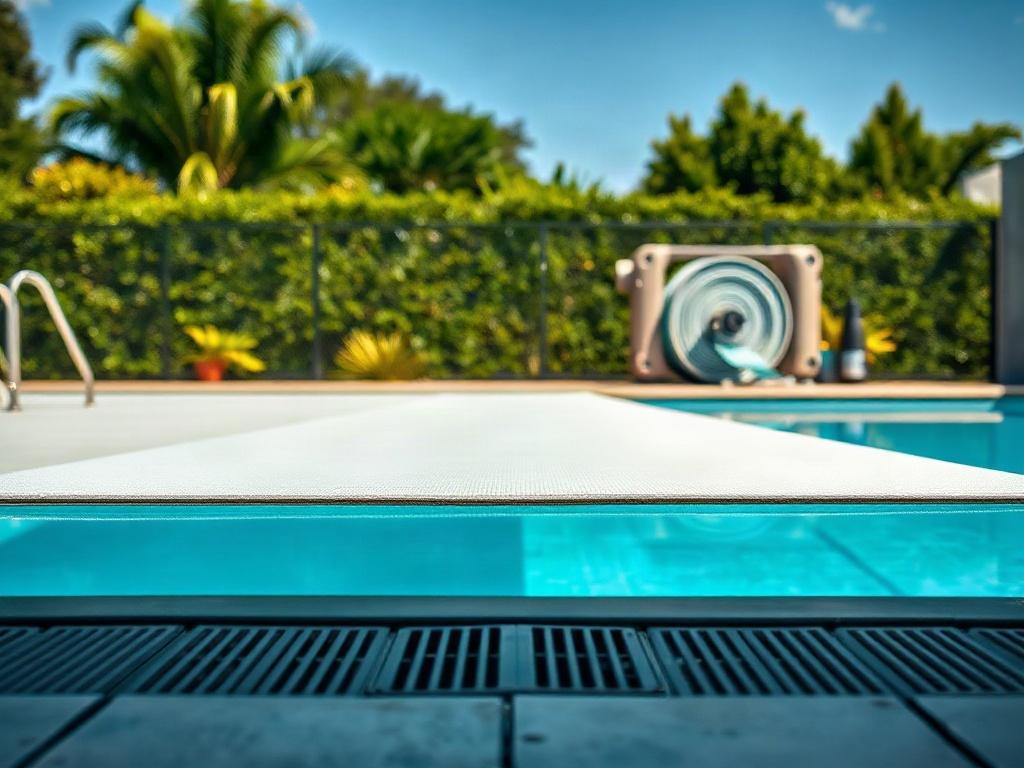
Pool covers don't all work the same way. Some require you to handle the cover yourself, while others open and close with the push of a button. If you're deciding between an automatic and manual option, the right choice will depend on how you use your pool and how much work you're willing to put into covering it.
Both types of covers can help keep debris out of the water and add an extra layer of protection when the pool isn't in use. The biggest difference is what happens when it's time to put the cover on or take it off.
An automatic pool safety cover uses a motorized system. Instead of pulling the cover across the pool by hand, you can open or close it using a switch or control.
The cover moves along tracks installed around the pool. Once it's fully closed and properly secured, it creates a barrier across the water.
For many families, the biggest benefit is how little work it requires. You don't have to drag a heavy cover across the pool or figure out where to store it while you're swimming. When you're finished for the day, closing the pool can be as simple as operating the control.
That convenience matters more than it may seem. An easy-to-use cover is much easier to incorporate into your routine.
Manual covers rely on the homeowner to open and close them. Depending on the system, this could involve pulling the cover across the pool, using a hand crank, or securing different parts of the cover before leaving it in place.
There's nothing inherently wrong with choosing a manual cover. In fact, it may make sense for a homeowner with a smaller pool or someone who doesn't mind doing the work.
Pool size can make a difference, though. Moving a large cover isn't always easy, especially if you're doing it alone. After several weeks or months of opening and closing it, the extra effort may become one more pool chore you'd rather avoid.
For everyday use, automatic pool covers tend to stand out.
Imagine finishing an afternoon in the pool. With an automatic system, you don't need to gather the cover, pull it into position, and secure it manually. You can close the pool with very little effort and move on with the rest of your evening.
A manual cover takes more involvement. It might only take a few minutes, but those minutes add up over an entire swimming season.
This is especially worth considering if you expect to cover your pool every time it's not in use. The easier the process is, the less likely you are to skip it because you're tired, busy, or simply don't feel like dealing with the cover.
A properly installed safety cover can be an important part of a pool's overall safety plan. When an automatic safety cover closes and secures properly, it creates a physical barrier over the pool.
Manual safety covers can serve a similar purpose. They also need to be installed and secured according to the manufacturer's requirements to work as intended.
The practical difference comes down to consistency. If a manual cover is hard to move, it's more likely it won't be put on after every swim. An automatic system removes much of that inconvenience.
Of course, no pool cover should be treated as a substitute for supervision or other safety measures. Fencing, alarms, supervision, and safe pool practices still matter.
Keeping a pool covered can make a noticeable difference with debris. Leaves, grass, dirt, and other outdoor debris have less chance of ending up in the water when the pool is covered.
That can mean less time skimming the surface and removing debris. It may also help you spend less time on routine maintenance that comes with an uncovered pool.
Both automatic and manual covers can provide this benefit. The difference is how easy the cover is to use.
An automatic system makes closing the pool quick. With a manual cover, you have to be willing to put in the physical effort every time. If that becomes a hassle, you may be less inclined to use it consistently.
Usually, yes. Automatic pool covers typically require a greater initial investment because of the motorized system, tracks, and installation involved.
That doesn't necessarily mean a manual cover is the better financial choice. Look beyond the purchase price and think about how you'll actually use the cover over the next several years.
Someone who swims several times a week may get considerable value from being able to close the pool without much effort. The same may be true for households where one person is primarily responsible for pool care.
An automatic cover can also make sense for anyone who knows that convenience will determine whether they actually use the cover regularly.
Start with your pool and your routine. A cover that works well for one household may not be the best option for another.
Consider:
It's also worth thinking about what pool ownership looks like for your family a few years from now. A system that's manageable today may not be as convenient as your needs change.
Your pool cover should work with your lifestyle, not create another difficult chore. At Absolutely Covered, we can help you compare your options and determine whether an automatic pool safety cover is right for your pool.
Reach out to our team to learn more about automatic pool safety covers and find an option that makes protecting your pool easier.